
UMTC and Green Marine officially welcomed the first batch of 2026 participants for the Basic and Advanced International Code of Safety for Ships Using Gases or Other Low-Flashpoint Fuels (IGF) training, marking another milestone in its continuing commitment to future-ready maritime education.
This batch follows the successful pilot class conducted previously, reinforcing UMTC’s ongoing efforts to prepare seafarers for the evolving demands of alternative fuel technologies and stricter environmental regulations.
Why IGF Training Matters for the Maritime Industry

The IGF Code is a critical framework in modern shipping, paving the way for the development of advanced engine technologies and the use of low-flashpoint fuels that significantly reduce greenhouse gas emissions such as CO₂, NOx, SOx, and particulate matter.
Since its adoption by the International Maritime Organization (IMO) and inclusion under the SOLAS Convention, IGF training
has become an STCW requirement for seafarers working on vessels powered by alternative fuels. It also enhances crew safety and protects the ship from fire and explosion risks.
As the sector shifts to alternative fuels, proper training is vital to navigate the higher risks and complexities they pose, ensuring operational safety and environmental protection, and aiming for net-zero CO₂ emissions by 2050.
Preparing Seafarers for LNG and Alternative Fuel Operations
The IGF course equips seafarers with the knowledge and skills to handle low-flashpoint fuels such as LNG and methanol safely. Trainees gain awareness of fuel properties, associated hazards, mitigation strategies, emergency response procedures, and the environmental impact of improper handling.
“This course prepares seafarers to manage new fuel technologies safely, understand potential hazards, and respond effectively to emergencies such as fires or accidental fuel spills,” emphasized C/E Ericson Teruel, Head of IGF Green Marine.
Key Competencies from Basic and Advanced IGF Courses
Basic IGF
Participants develop competencies to:
- Contribute to the safe operation of ships using low-flashpoint fuels
- Take precautions to prevent hazards
- Apply occupational health and safety procedures
- Respond effectively to emergencies
Advanced IGF
Advanced trainees further learn to:
- Operate and monitor fuel systems
- Plan and conduct bunkering operations
- Manage fuel-related emergencies
- Ensure compliance with international regulations
Enhancing Training Quality Through Green Marine Partnership
This partnership with Green Marine bridges the gap between regulations and real-world ship operations, ensuring crews are trained not only to comply but to operate safely and efficiently.
Green Marine’s involvement brings extensive engineering and operational expertise to the training program, covering dual-fuel engine design and operation, fuel system engineering, onboard troubleshooting, crew familiarization, and safety management system development.
Trainee Feedback and Expectations
The trainees, primarily engine ratings, ETO, and third officers, expressed enthusiasm and appreciation for being selected by their company, MRM Socatra, to attend the course. They gained enhanced understanding of low-flashpoint fuels, their properties, hazards, and emergency procedures. More feedback is expected after completion of the Advanced IGF and Methanol training programs.

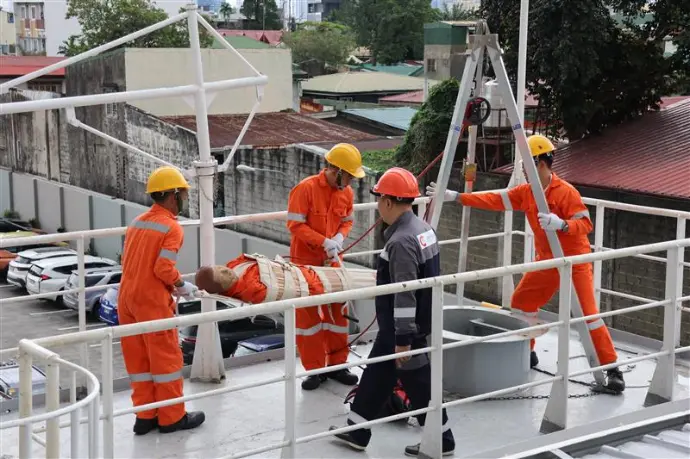
Through its IGF training programs and strategic partnership, UMTC and Green Marine remain committed to equipping seafarers with the knowledge, skills, and confidence to safely operate the vessels of the future—ensuring safer seas, sustainable operations, and a resilient maritime industry for generations to come.
To enroll in this course, contact our sales team through sales@umtc.com.ph or call us at +63 2 981 6682 loc 2143 / 2128